

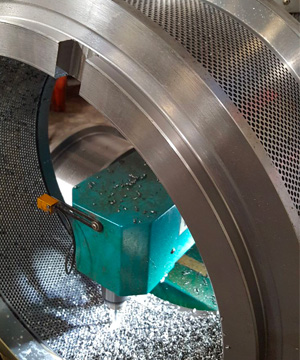
We manufacture pellet dies using premium-grade alloy and stainless steels selected specifically for demanding pelleting applications. Material selection is critical in determining pellet die durability, wear resistance, corrosion resistance and overall operating life.
With decades of experience manufacturing pellet dies for feed mills, biomass plants and industrial pelleting operations, we are able to recommend the most suitable material specifications for each customer's production requirements.
Our pellet die materials are carefully selected to provide excellent resistance to abrasion, cracking, corrosion and high compression operating environments.
All pellet dies are precision machined and heat treated to ensure maximum performance, hole consistency and long service life.
We manufacture pellet dies using premium-grade alloy and stainless steels specifically selected for high-pressure pelleting environments. Material selection plays a critical role in pellet die durability, hole wear resistance, corrosion resistance and overall production efficiency.
Pellet dies operate under extreme compressive forces and thermal stress during production. The correct material specification helps reduce through-hole cracking, premature wear, deformation and production downtime.
With decades of experience manufacturing pellet dies for feed mills, biomass plants and industrial pelleting operations, we are able to recommend suitable material grades based on compression ratio, raw material abrasiveness, steam conditioning levels and production capacity.
All pellet dies are precision machined, vacuum heat treated and quality inspected to ensure maximum durability, consistent pellet quality and long operating life.
COMMON PELLET DIE MATERIALS
-
40Cr Alloy Steel Pellet Dies40Cr alloy steel is widely used for standard feed pellet die applications due to its excellent toughness, machinability and resistance to deformation under high operating loads. This material provides strong structural stability and reliable working life in general feed production.
-
4Cr13 Stainless Steel Pellet Dies4Cr13 stainless steel offers improved corrosion resistance for pelleting environments involving higher moisture content, steam conditioning and corrosive raw materials. This material is commonly used for aquatic feed pellet dies where resistance to rust and hole corrosion is critical.
-
X46Cr13 Stainless Steel Pellet DiesX46Cr13 stainless steel combines high hardness with strong corrosion resistance, making it suitable for demanding pelleting applications requiring extended die life, improved hole wear resistance and greater resistance to abrasive formulations.
-
Materials for Biomass Pellet DiesBiomass pellet dies often require higher wear resistance due to abrasive materials such as wood fibre, agricultural waste and mineral contamination. Depending on operating conditions, higher hardness materials and specialised heat treatment processes may be recommended.